
Andre Ward: The Last Man
Shaking Off the Doubters
Every fighter faces adversity, but for a young Andre Ward, the critiques came early and hit hard. In a candid conversation with his legendary trainer Virgil Hunter, Ward revisited the moments that could have derailed his career before it truly began. An early knockdown against Darnell Boone fueled a dangerous narrative. “The knock on me was he got an amateur style, he don't hit hard and he can't take a punch,” Ward recalled. “I had to shake that off for years.” The pressure mounted, with HBO reportedly telling his team, “if we got one more slip up, that's it.” But Hunter never lost faith. He saw the knockdown not as a sign of a weak chin, but as a recoverable mistake. “You got up and you actually had him hurt,” Hunter explained. “If you have stayed down, oh man, we got a problem. But you came back within seconds.” That resilience, forged in the fires of early criticism, would become a hallmark of Ward’s career.
The Super Six Gauntlet
Ward’s defining moment almost never happened. As Showtime was assembling the Super Six World Boxing Classic—a historic tournament featuring the world’s top six super middleweights—Ward was on vacation in Mexico, being told the event wasn’t going to materialize. Then came the frantic call from Virgil Hunter. The first press conference was already underway in New York, and Ward wasn’t there. “You need to get on the plane right now,” Hunter warned, “because you're not gonna be a part of this tournament and it's gonna lock you out.” Rushing from Mexico to San Diego, back to the Bay Area, and then catching a red-eye to Germany with a double ear infection, Ward made it to the second press stop. The vibe was clear: the Americans were considered underdogs. “They got us here as like a placeholder,” Ward told Hunter. “I'm the gold medalist so that's good window dressing... but they really about the Europeans.” Hunter’s response was simple and prophetic: “We going to show them.”
The Hunter Philosophy: Set The Tone
Faced with a murderers' row of champions like Mikkel Kessler, Carl Froch, and Arthur Abraham, Virgil Hunter’s strategy for Ward was counterintuitive: take on the toughest challenge first. Ward drew Kessler, the formidable Dane, in his hometown of Oakland for the opening round. “Why you always want me to take the rough route?” Ward asked his trainer. Hunter’s reasoning was profound. “That's to stimulate your mind... it sets the tone,” he explained. “I'm going to set the tone in the very first fight. So anybody who didn't have their mind on me or looked at me as a threat... now they know.” Ward’s dominant, bloody victory over Kessler did exactly that. It announced his arrival not just as a participant, but as the man to beat. It was a philosophy that defined their partnership: embrace the difficult path, because that’s where legacy is built. As Ward reflected, “I don't always like that route, but for whatever reason... when it's all said and done, it's gonna be clear when the dust settles.”
A Calculated Exit on Top
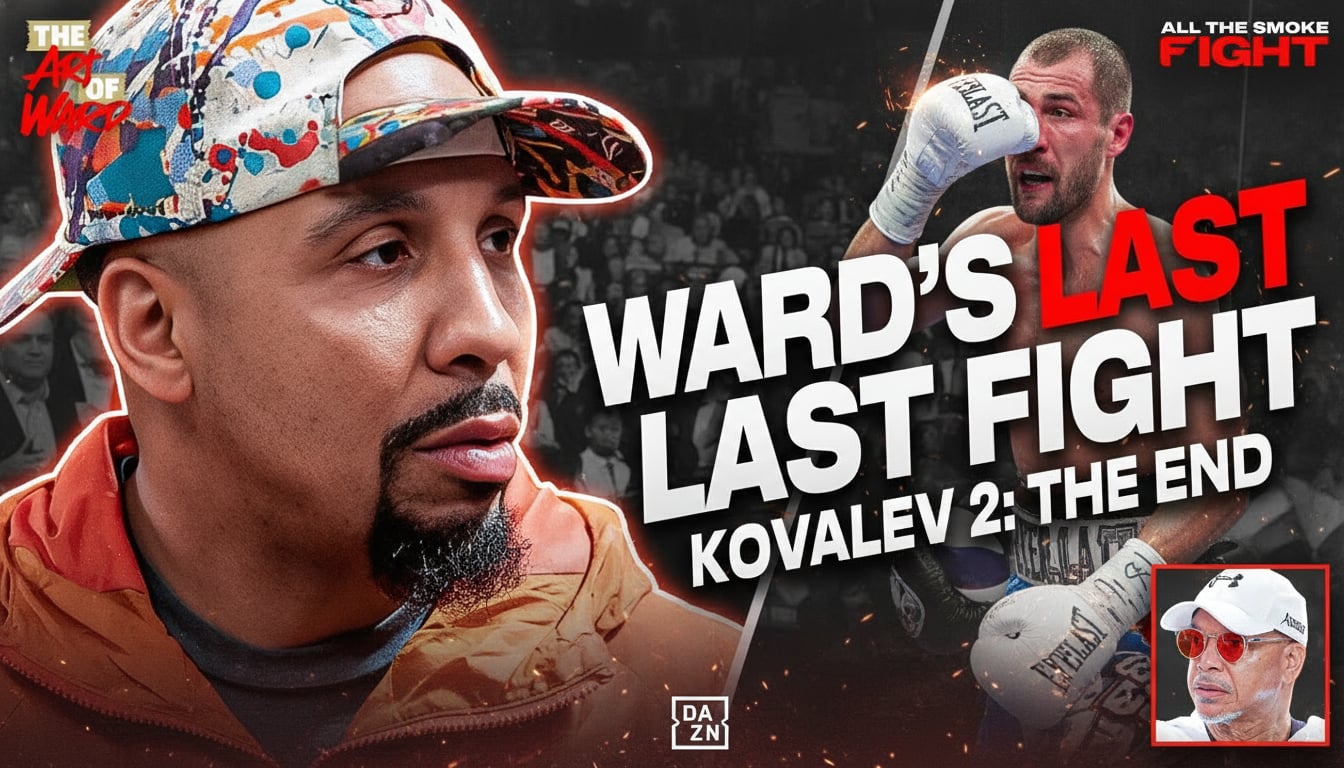
Ward’s career arc followed a consistent theme: overlooked in the beginning, undeniable in the end. After winning the Super Six, he cleaned out the 168-pound division. He then moved up to 175 and did the same, culminating in two victories over the division’s boogeyman, Sergey Kovalev. That, he knew, was the pinnacle. He had an exit strategy. “I beat the boogeyman of the light heavyweight division,” Ward stated, dismissing criticism that he ducked future champions. “You don't fight number one and duck four and five or five and six. I went straight to the top.” For Hunter, it was the fulfillment of a plan set years earlier: get out of the game before the game retires you. Ward walked away undefeated, a first-ballot Hall of Famer, and a master of his own destiny. He left on his terms, cementing a legacy not just of winning, but of winning with intelligence, grit, and a clear vision from start to finish.