
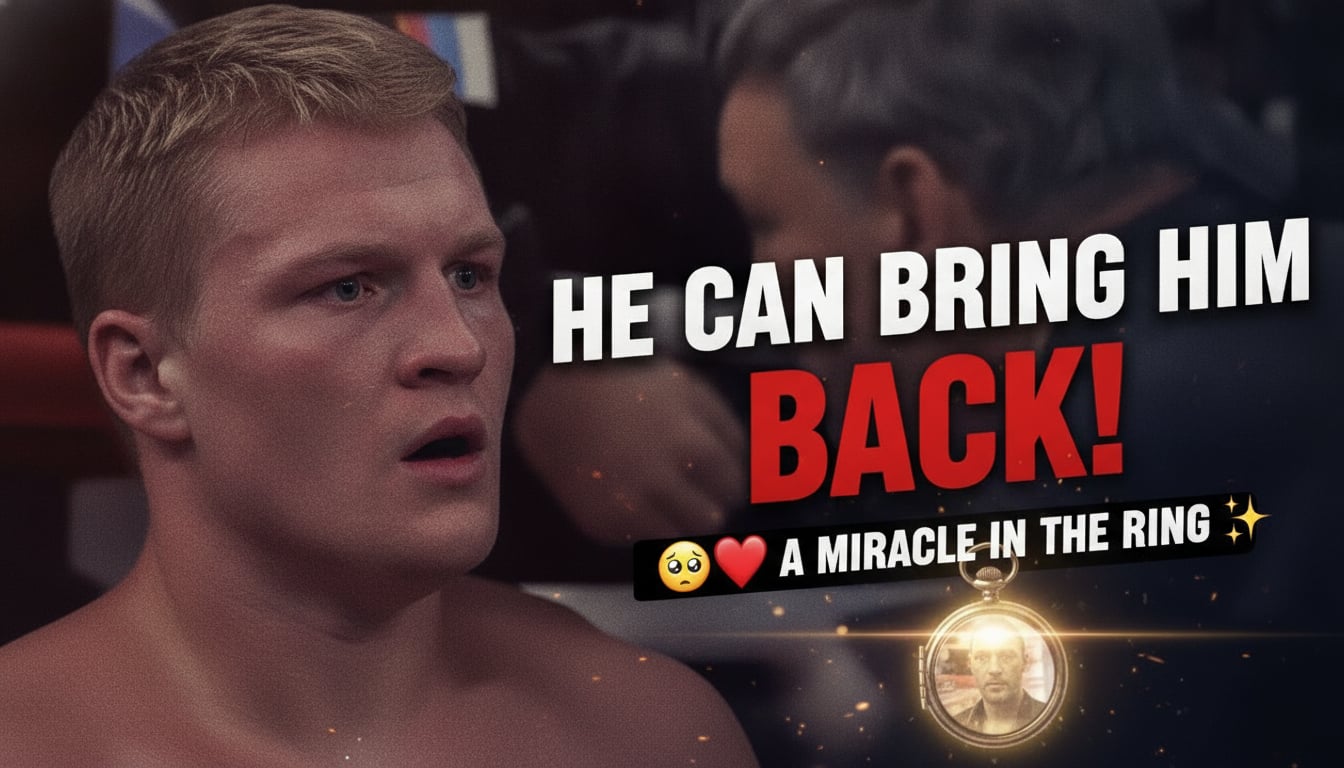
Bringing Back a Father's Legacy
The Magic of Memory
"You believe in magic?" That's the question legendary trainer and analyst Teddy Atlas poses in a raw, intimate moment captured on his show, "THE FIGHT." It's not a question about sleight of hand or illusions, but about something far more profound. It’s about the kind of magic that can only be conjured in the crucible of a championship fight. "Sometimes we can bring people that left us back," he continues, his voice gravelly with conviction. "We can bring your father back tonight."
For any fighter, the climb to the top is arduous, lonely, and fueled by a fire that often burns for reasons far beyond personal glory. In this poignant exchange, Atlas taps into the deepest well of motivation a fighter can have: legacy. He explains that when the fighter becomes the new world champion, the world won't just talk about him. They will talk about his father. The name, the story, the spirit of the man who came before will be resurrected in the headlines and annals of boxing history, brought back to life by the triumph of his son. It’s a powerful, almost spiritual, transaction where victory pays a debt to the past.
The Voice in the Corner
Teddy Atlas isn't just a trainer; he's a boxing sage, a master psychologist who understands that the battle is won in the mind and heart long before it's won in the ring. His pre-fight speeches are the stuff of legend, moments of pure theatrical fire and brimstone that have turned uncertain contenders into world-beaters. He famously guided a young Mike Tyson, took Michael Moorer to a heavyweight title, and has been the voice of reason and inspiration for countless others. What makes Atlas unique is his ability to see the man behind the fighter and connect the violence of the sport to the deepest parts of their humanity.
When Atlas speaks of bringing a father back, he's not just offering a motivational platitude. He's providing a narrative, a purpose that transcends the pain and punishment of the fight itself. He is arming his fighter with an emotional shield and a spiritual weapon. In the loneliest moments under the bright lights, when exhaustion sets in and doubt creeps from the shadows, that purpose becomes an unbreakable anchor. It's the voice of the corner transforming a boxing match into a sacred mission.
Fighting for More Than a Belt
Every fighter dreams of a world title belt. It's the symbol of ultimate achievement, a gleaming trophy that validates a lifetime of sacrifice. But for many, the belt is secondary. It's a means to an end, a physical manifestation of a promise made to a loved one, a way to honor a memory. We see it time and time again in combat sports—fighters pointing to the heavens after a victory, dedicating their performance to a lost parent, sibling, or mentor. This is the emotional core of the sport, the narrative that elevates it from a mere athletic contest to something deeply human.
Atlas's words crystallize this sentiment perfectly. The goal isn't just to win; it's to make a name echo through time. The championship becomes a platform to tell a story, to ensure that a father’s influence, his lessons, and his love are not forgotten. The son's success becomes the father's final, greatest victory, a testament to the life he lived and the champion he raised. The leather and gold of the belt are temporary, but the story it allows the fighter to tell is eternal.
A Legacy Forged in the Ring
In the end, what is boxing if not a sport of stories? Every punch thrown is a word, every round a chapter, and every fight a new volume in a fighter's epic. By winning, a fighter doesn't just write his own story; he becomes the co-author of his family's history. He forges a link in a chain of legacy, one hammered out with sweat, blood, and sheer force of will. The phrase "the new world champion" is followed by a name, and that name carries with it the ghosts and heroes of the past.
Teddy Atlas understands this better than anyone. His magic isn't about pulling rabbits out of a hat. It's about pulling greatness out of a man by reminding him of who he is and where he comes from. By becoming champion, the fighter ensures that when people speak of him, they are "thinking about his" father. He brings him back into the conversation, into the light, and into legend. That is a magic more powerful than any illusion, and a prize more valuable than any belt.