
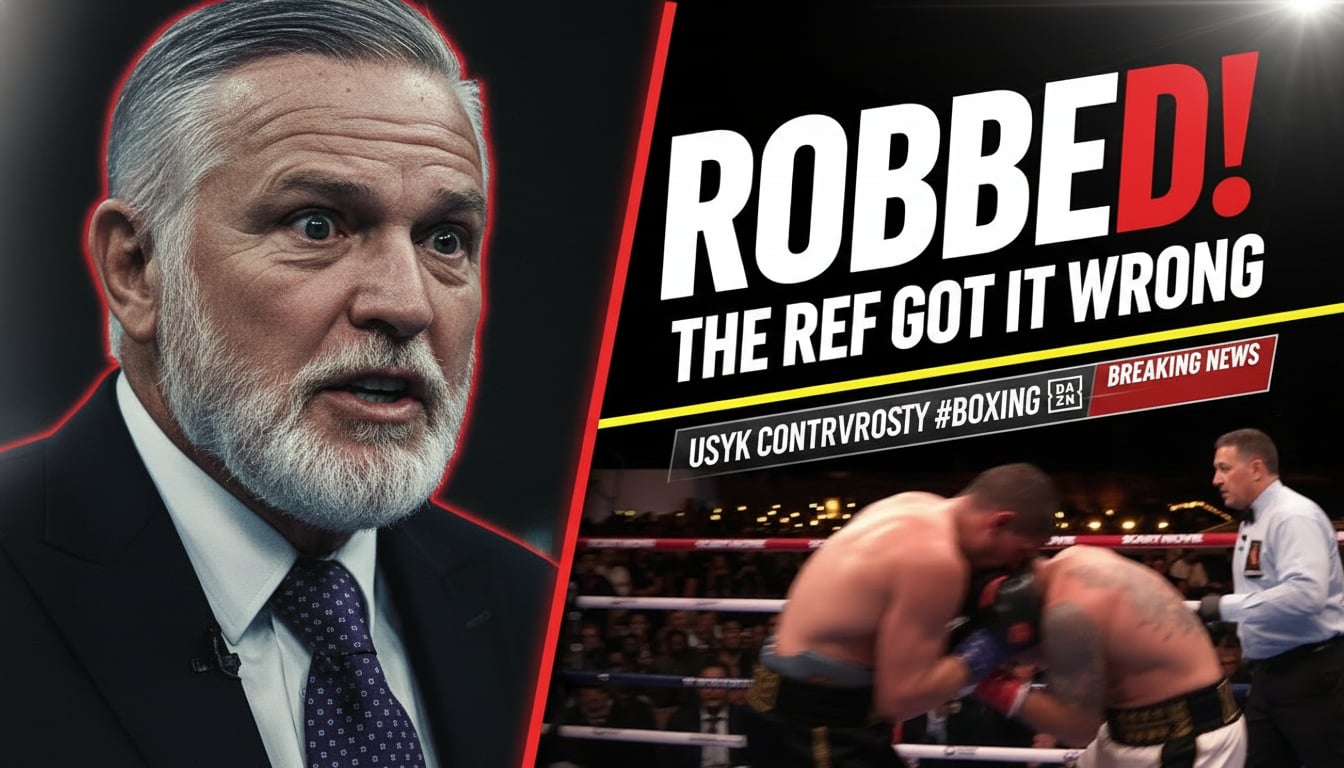
Coach Slams 'Wrong' Stoppage
“He Got It Wrong, And We Can't Do Jack”
In the aftermath of what should have been a celebrated night of world championship boxing, one corner was left with nothing but frustration and a bitter sense of injustice. Speaking with raw emotion, the trainer for Usyk’s latest challenger didn’t mince words about the controversial ending that has the fight world talking. “Yeah, look, he got it wrong, but it’s happened,” he stated, the exasperation clear in his voice. “And as the old saying goes, we can't do jack about it.”
This feeling of helplessness is a common one in boxing, where a referee’s split-second decision is final. “Once that referee does that, we can kick, we can scream, it's all going to do no good,” the coach explained. The controversy was compounded by a curious detail: the referee reportedly didn’t hear the 10-second clacker signaling the end of the round. When asked if he heard it, the trainer was unequivocal: “No. I never.” This crucial missed signal may have contributed to a decision that he firmly believes was premature.
A Fighter on His Feet, Denied His Corner
The core of the team’s argument lies in their fighter’s condition when the bout was waved off. They paint a picture not of a defeated man, but of a warrior weathering a storm and ready to continue. “He's on his feet. He's not down. He's not stumbling all over the place,” the trainer insisted. “He's defending and he's coherent.”
What makes the stoppage particularly galling for the corner was its timing. The bell to end the round had already sounded. Their fighter was, in the trainer’s words, “from here to that cup to the corner.” The chance to sit down, recover for a minute, and receive instructions for the next round was snatched away. “Let him sit down and have a minute. It's world championship boxing.” To them, the stoppage wasn’t just a bad call; it was a denial of the grit and recovery that defines championship-level contests.
The Six-Month Game Plan That Nearly Worked
The controversial ending overshadowed what was, by all accounts, a meticulously crafted strategy. The trainer praised his fighter, Rico, as a “phenomenal athlete” and a “13-year world champion” who is a natural fighter. This wasn't a thrown-together effort; it was the culmination of a grueling six-month training camp. Interestingly, the camp began with a different opponent in mind. “Don’t forget we had a six month training camp first with AJ where it fell over for obvious reasons,” he revealed. That work was then pivoted and refined over three more months specifically for Usyk.
The team knew they had to adapt Rico's kickboxing roots for the sweet science. “When we talk about kickboxers, yeah, I agree. either sat on the back foot, they block with a leg, they stand square. There's loads of faults there, but we'd ironed them out.” The goal was to create a specific plan “which offsets what Usyk does.” And for long stretches of the fight, it appeared to be working perfectly, making the final outcome all the more difficult to swallow.
The Rematch: Adjustments on Both Sides
While the sting of the loss is fresh, talk inevitably turns to the future. A fight this good, ending in a cloud of controversy, screams for a sequel. The trainer is a realist, understanding that no two fights are the same. He fully expects the Ukrainian master to adapt. “Usyk will make adjustments,” he acknowledged, before adding with a confident resolve, “but so will we.”
The first fight proved their game plan could trouble one of the pound-for-pound best. Now, armed with invaluable first-hand experience, they believe a second encounter would be even more compelling. The tactical chess match that played out was cut short, but the pieces are ready to be set on the board once more. For a team that feels robbed of a fair conclusion, a rematch isn't just a possibility; it's a necessity.