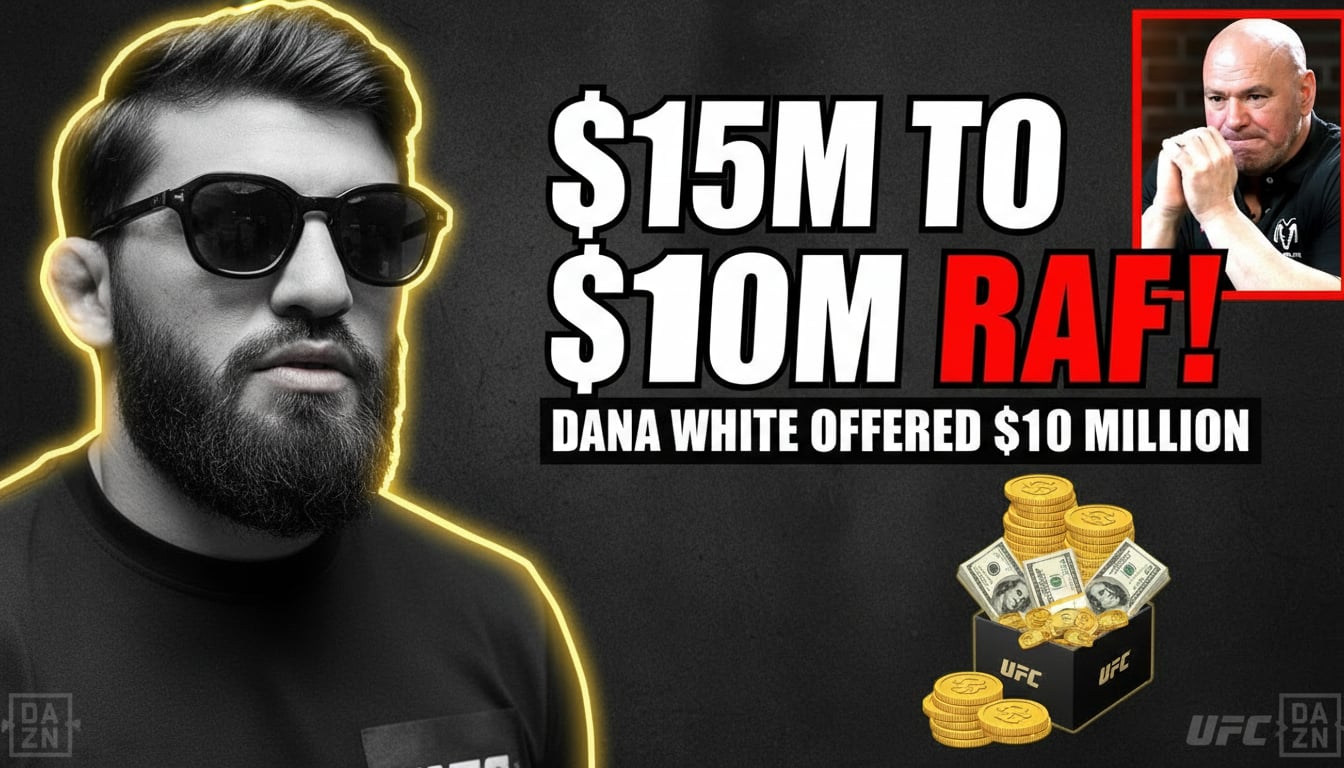
Dana's Truth: Career or Cash
Dana White's Controversial Career Advice
In the high-stakes world of mixed martial arts, the debate over fighter pay and longevity is a constant undercurrent. But what if the entire premise is wrong? According to a sentiment echoed by Dana White and discussed by fighters, this isn't a traditional career at all. "This isn't a job. This isn't a career," one voice in the MMA sphere recounted hearing from the UFC boss. "This is an opportunity for you to become as famous as you can possibly be... and make as much money as you can possibly make." The sentiment is stark but, for some, rings true. While a 12-year veteran might seem to have had a long career, at 36 years old, they still have decades of life to fund after the fights are over. "If you have a career at Microsoft, you're going to get stock options. You're going to have health benefits," one commentator noted, contrasting it with the brutal finality of an athletic career. "In mixed martial arts... you can't work that long."
The McGregor Effect and Influencer Chaos
This "small window of opportunity" philosophy perfectly explains the modern landscape of combat sports, a world dominated by spectacle and massive paydays. The impending return of Conor McGregor is a prime example. "Because you like McGregor or not? He's one of a kind," a guest stated, praying for a McGregor victory. "He was the biggest star in the sport for a reason. He's the best with the mic." The excitement isn't just about the fight; it's about the circus. The trash talk, the press conferences—it's the kind of high-profile event that generates life-changing money. This phenomenon extends beyond the UFC, with influencer boxing promotions like Misfits reportedly tabling massive offers. "Misfits have offered us 10 million each so far," one personality revealed. "It's a nice start, but you you got to tick that up significantly." When non-fighters are being offered eight-figure sums, it puts immense pressure on professional athletes to chase the biggest, loudest, and most lucrative events possible, sometimes at the expense of traditional rankings.
High-Stakes Predictions in a Brutal Sport
With the clock ticking on every fighter's window, the need to "shock the world" becomes paramount. Every fight is a roll of the dice for a bigger contract or a title shot. We hear fighters making audacious claims, like one vowing to do the unthinkable against a dominant champion: "With Islam, I'm like to shock the world, I have to submit him... I'm going to take him down and I'm going to submit him." It's a bold, almost unbelievable prediction, immediately shot down by another analyst who claimed there's "zero chance" of that happening. This high-stakes environment also leads to frank, sometimes brutal, assessments of matchups. A seasoned wrestler, when asked about a hypothetical grappling match between Arman Tsarukyan and Colby Covington, didn't mince words. Despite Tsarukyan's skill, he stated, "there's no way Arman beats Colby" in a pure wrestling contest, citing Covington's Division I All-American pedigree.
Living with the 'Get To' Mentality
For those inside the cage, navigating this short, intense, and often unforgiving path requires a unique mindset. One fighter's post about their recovery from a devastating injury sums it up perfectly. "You can live life with a 'get to' mentality or a 'got to' mentality. The choice is yours," they wrote. After having everything taken away, the perspective shifts. The grueling work of training, the pressure of competition—it all becomes a privilege. "When everything is taken from you and you can't do anything under your own power, you realize just how much you took for granted." This gratitude, this understanding that the ability to compete is a gift, is perhaps the only way to endure the physical and financial pressures of a life that Dana White describes not as a career, but as one fleeting, golden opportunity.