
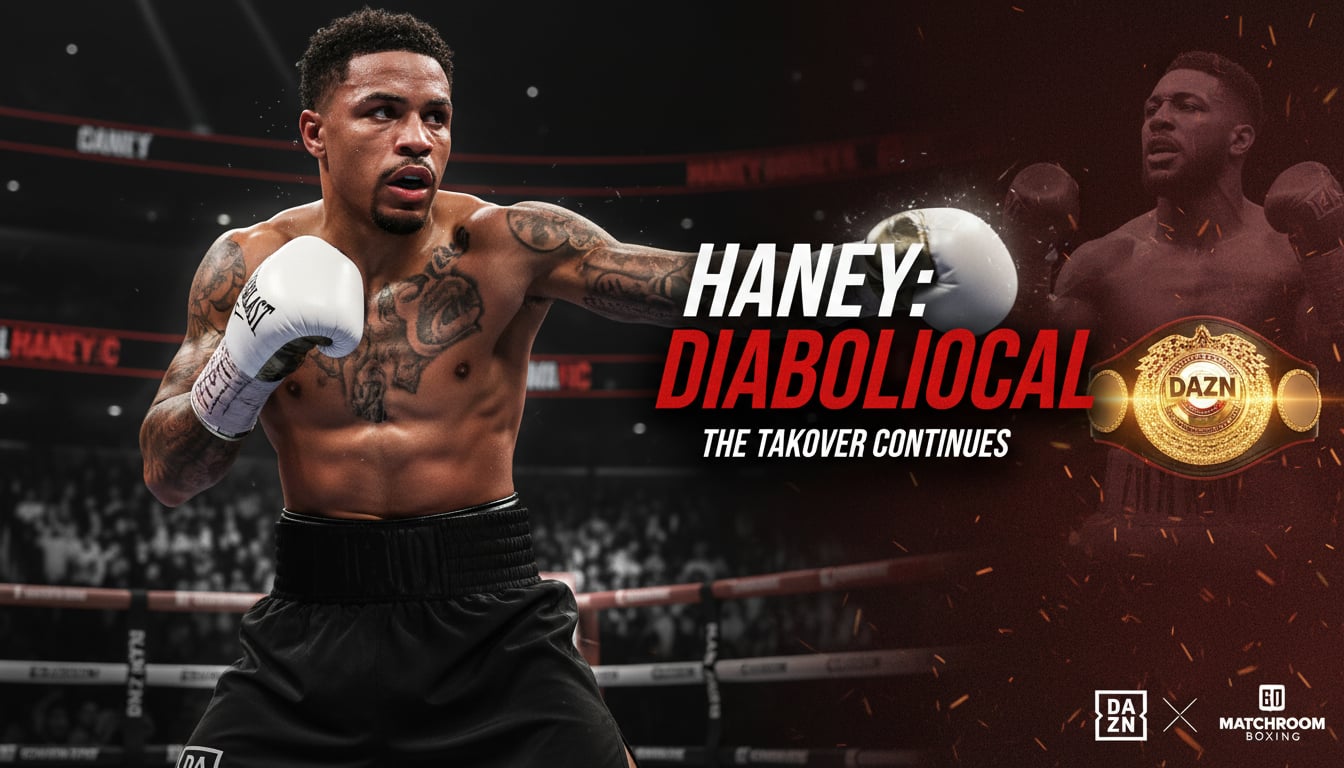
Devin Haney: Boxing's Necessary Villain
The Most Hated Man in the Game?
Every great story needs a protagonist, but it also needs an antagonist. In the grand theater of modern boxing, Devin Haney has, whether by design or by fate, stepped firmly into the role of the villain everyone loves to hate. As the host of "ShowBizz The Adult" puts it, Haney isn't just another fighter on the roster; he might just be "the most disliked professional boxer in the game." This isn't your run-of-the-mill booing from the cheap seats. The sentiment against Haney is so potent, so deeply ingrained, that fans have adopted a paradoxical strategy: they refuse to even speak about their dislike for him, believing that any attention, even negative, is "giving him too much." The host calls this phenomenon "diabolical," and it's a testament to the unique space Haney occupies in the combat sports landscape. He doesn't just win or lose fights; he elicits a visceral, emotional reaction that few of his peers can match.
Turning Animosity into A-Side Money
Herein lies the genius—or perhaps the simple economic reality—of the Devin Haney business model. Despite the widespread animosity, the verdict is clear: "You pay him. You pay him." In the world of prize fighting, emotion is the ultimate currency. Love, hate, respect, disdain—it all converts into pay-per-view buys, ticket sales, and media impressions. Haney, much like Gervonta "Tank" Davis, has mastered the art of tapping into what the video calls "hyper emotions." He makes people feel something, and in a sport that thrives on passion, that's an invaluable skill. Fans may tune in with the fervent hope of seeing him get knocked out, but the crucial part is that they tune in. Every jeer from the crowd, every angry comment on social media, every debate in a barbershop only adds another dollar to his value. The hate doesn't hurt his bottom line; it fuels it.
The 'Hero-Maker' Effect
Perhaps the most compelling evidence of Haney’s potent villainy is his almost supernatural ability to create heroes out of his opponents. The transcript points to the perfect case study: Ryan Garcia. Before their blockbuster fight, Garcia was a polarizing figure himself, often criticized for his social media presence and perceived lack of focus. Yet, in the build-up and aftermath of their clash, public perception shifted dramatically. Why? Because as the video states, "Ryan Garcia became a hero... That's how hated Devin Haney is." Haney’s role as the antagonist was so convincing that it completely reframed the narrative, casting his rival as the valiant underdog fighting against the establishment figure. Being a villain is one thing; being a villain so effective that you can launder the public image of your opponents is a rare and powerful position to hold in the sport.
Why You Can't Stop Watching
Ultimately, the discussion around Devin Haney always circles back to one undeniable truth: "That guy pushes the needle. Period." He is a constant topic of conversation. His fights are events. His press conferences generate headlines. In an attention economy where relevance is fleeting, Haney has made himself an indispensable part of the boxing narrative. He is the character you can't ignore, the fighter whose next move you have to watch, even if it's through gritted teeth. He embodies the classic P.T. Barnum principle that there's no such thing as bad publicity. As long as people are talking, arguing, and, most importantly, paying, Devin Haney will remain a main protagonist in the ongoing drama of boxing. He’s the villain the show desperately needs, and he's cashing every single check that comes with the job title.