
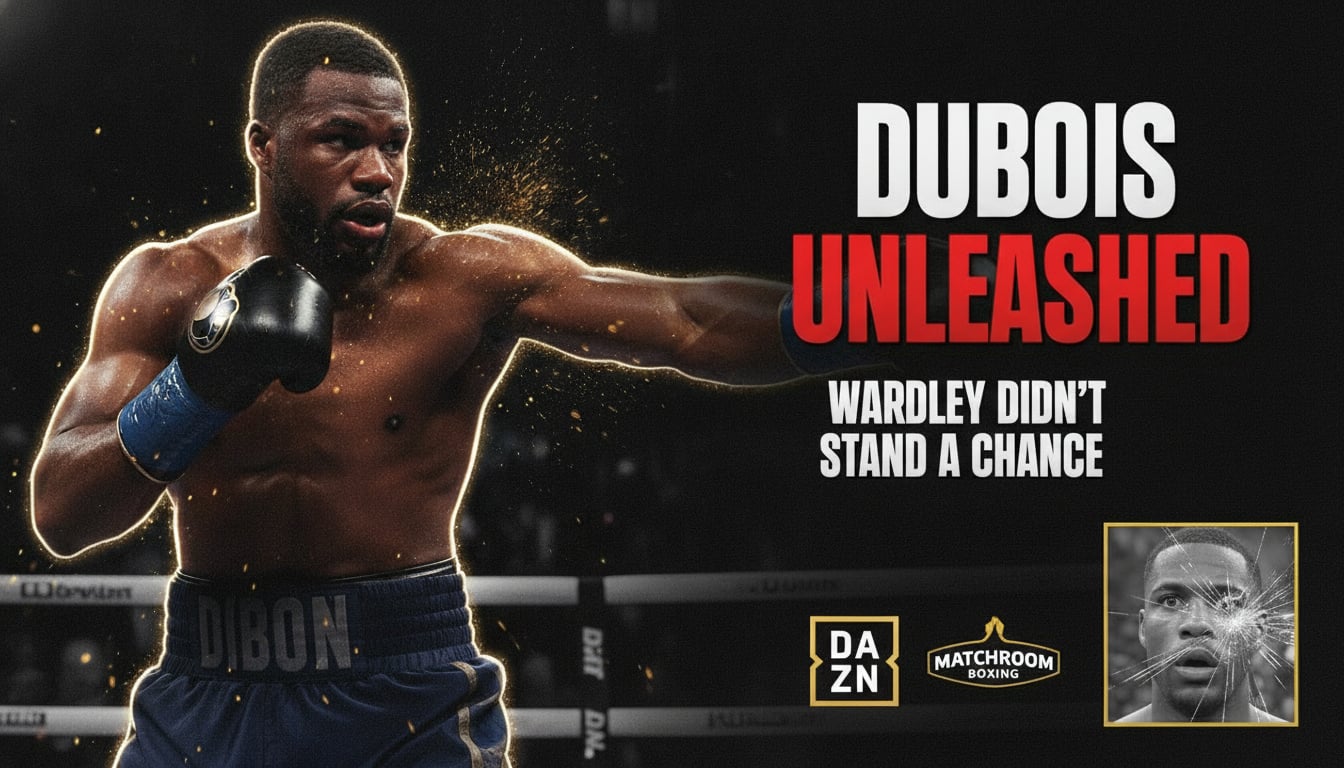
Dubois Rejects Wardley's Truce
A Truce Shattered
In the world of heavyweight boxing, the space between two fighters during a face-off is sacred ground, charged with unspoken tension and psychological gamesmanship. But during a recent press event for their highly anticipated rematch, Daniel Dubois and Fabio Wardley turned that charged space into a theater of raw, unfiltered animosity. The typical stoic glares and muttered trash talk gave way to a moment of genuine hostility that has redefined the narrative of their rivalry. Footage from the head-to-head shows Dubois actively seeking confrontation, demanding they get closer. “Give me some of that face to face,” he starts, his voice low and menacing. The air immediately thickens, and the professional veneer cracks, revealing something far more personal boiling beneath the surface.
‘We’re Not Cool’: The Raw Emotion of a Rivalry
What followed was a stark rejection of the unspoken code of conduct between warriors. Fabio Wardley, seemingly taken aback by the intensity, attempted to de-escalate, expressing a sentiment familiar to any fight fan. “I thought after the fight we was all right,” he says, referencing the mutual respect often earned after sharing a ring. It was an olive branch, an acknowledgment of their shared history. Daniel Dubois didn't just ignore it; he set it on fire. “No,” was his chillingly simple reply. He continued, drawing a line in the sand that could not be un-drawn: “You're not like me. We're not cool. We don't get along.” This wasn't manufactured hype for the cameras. It was a visceral, emotional declaration. Dubois's final words in the exchange—“You just want to beat me up”—were not an accusation, but a statement of fact, stripping the contest down to its most brutal and essential truth.
From Post-Fight Respect to Pre-Rematch Hostility
This explosive encounter stands in stark contrast to the memory of their first bout. While every fight is a violent affair, many end with an embrace, a nod of respect for the courage and skill of the opponent. Fans likely assumed a similar dynamic existed between Dubois and Wardley, two of Britain’s top heavyweights who had tested each other’s limits. That assumption has now been completely obliterated. The question on everyone’s mind is: what changed? Did the quiet moments after the first fight mask a deeper resentment from Dubois? Or has the time apart, coupled with the pressure of a rematch, allowed a simmering dislike to boil over into genuine contempt? Whatever the reason, the dynamic has fundamentally shifted. The memory of a respectful athletic contest has been replaced by the promise of a deeply personal war.
Psychological Warfare: Dubois's Game Plan
Beyond the raw emotion, there is a layer of strategy to consider. Dubois is actively dismantling any comfort or familiarity Wardley might have felt. By refusing to play the part of the respectful rival, he is forcing Wardley to confront a pure, predatory opponent who has no interest in sportsmanship—only destruction. This is psychological warfare at its most effective. Dubois is making it clear that when they step into the ring again, Wardley won't be facing a fellow athlete; he'll be facing an enemy. This new, venomous atmosphere raises the stakes for fight night exponentially. Every punch will carry the weight of this bitter exchange. The rematch was always going to be big, but thanks to a few tense moments and a handful of brutally honest words, it has now become a can’t-miss event fueled by genuine, undeniable animosity. The talking is over. The truce is broken. All that's left is the fight.