
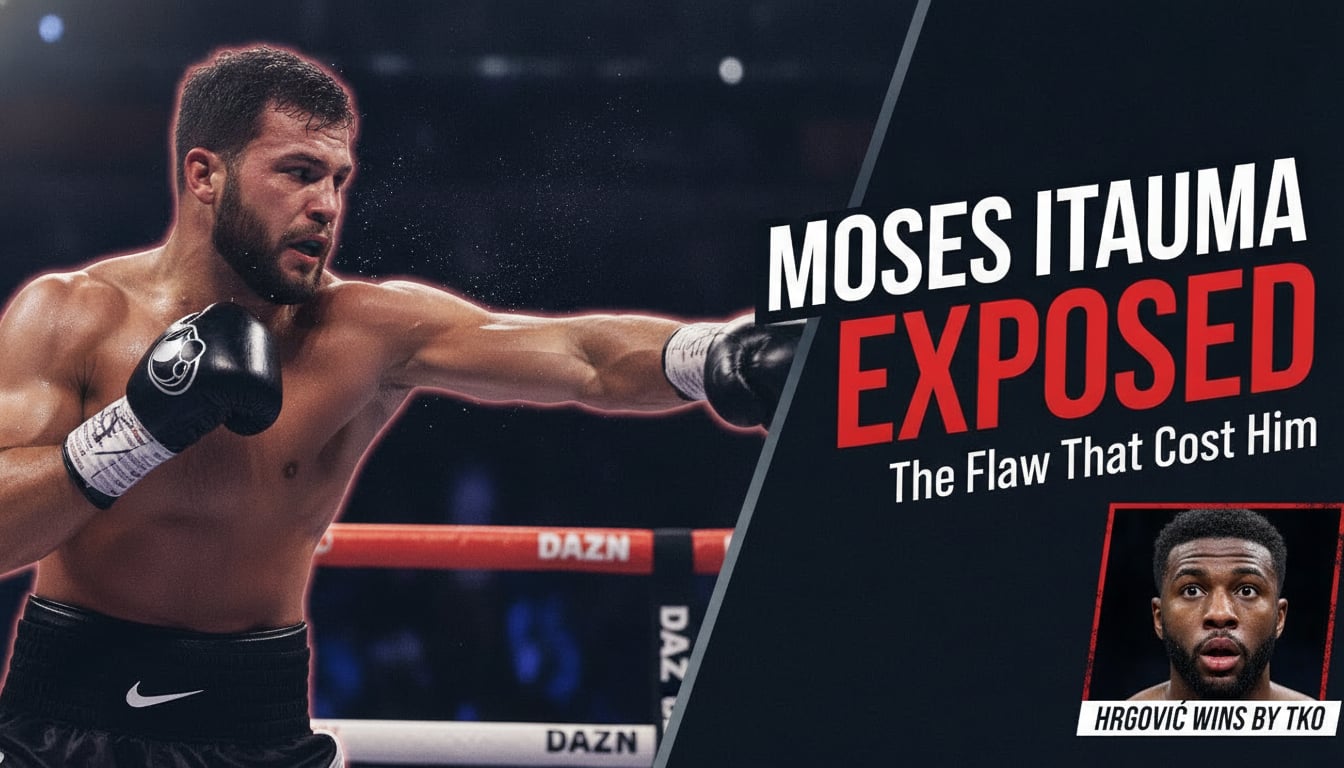
Itauma Exposed: Talent Isn't Enough
A Shocking Collapse, Not a Knockout
The hype surrounding Moses Itauma was immense. A generational talent, a phenom destined for greatness. And for much of his title fight against veteran Filip Hrgović, he looked the part. The skills, the speed, the power—it was all on display. As one analyst put it, Itauma was “thoroughly, systematically whooping his ass.” But then, the unthinkable happened. It wasn't a thunderous shot from Hrgović that ended the fight. It was Itauma’s own body betraying him. He didn’t just lose; he collapsed, leaving the ring on a stretcher not because of the punishment he took, but because he was physically incapable of continuing. His gas tank was empty. The flaw that was exposed wasn’t in his talent, but in his conditioning. He lost the fight because he wasn’t in 12-round shape.
The Cardinal Sin of Preparation
How does a world-class fighter arrive for a championship bout unprepared for the championship distance? The post-fight breakdown revealed a stunning, almost unbelievable oversight. When asked if he had ever done 12 intense rounds of sparring in camp, Itauma admitted he hadn't. That single admission is a damning indictment of his entire camp, a level of negligence described as nothing short of “malfeasance.” This oversight stemmed from a dangerous mix of youthful confidence and hubris. Itauma and his team believed his god-given talent was so overwhelming that Hrgović would fall just like everyone else. They failed to prepare for the worst-case scenario: an opponent who could take the shots and was ready for war. Hrgović, a seasoned veteran with fights against Daniel Dubois and Joe Joyce on his resume, tried to warn the 21-year-old. He explained that at the elite level, having a chin matters because you will get hit. Itauma scoffed, and he paid the price for it.
Accountability in the Corner and the Mirror
When a fighter shows up unprepared, the first finger is always pointed at the corner. Head trainer Ben Davison is facing intense criticism, with some calling the lack of 12-round sparring “grounds to be fired.” As a world-level coach with over a decade of experience, he should have ensured his fighter was ready for every eventuality. However, the blame doesn't stop there. At 21, Moses Itauma is a professional, a man signing the contracts and stepping into the ring. He, too, must be held accountable for his preparation. To shield him from criticism because of his age is to enable the very behavior that led to his downfall. In professional sports, accountability is the catalyst for growth. Itauma fell not because of a punch, but because of a collective failure in preparation—a failure he was a part of. Both he and his team gambled on a quick knockout, and they lost everything when their opponent refused to fold.
The Long Road Back to the Top
Despite the devastating and embarrassing nature of the loss, the consensus is that Moses Itauma is still the goods. This was not an exposure of limited talent; it was a costly lesson in professionalism. He learned that at the highest level, talent alone is not enough. You have to put the work in. You have to prepare for a 12-round war, even if you plan for a one-round blowout. The good news is he didn't take much physical punishment, and the path to redemption is clear. The next step shouldn’t be another immediate title shot, but a strategic rebuild. He needs to face sturdy, durable contenders—fighters who won't fall down from the first clean shot. He needs to experience the grueling later rounds and prove to himself and the world that he has learned his lesson. Life is a marathon, and every great fighter faces adversity. Itauma has tasted the concrete; now it’s time to pick himself up, dust himself off, and become the complete fighter he was always meant to be.