
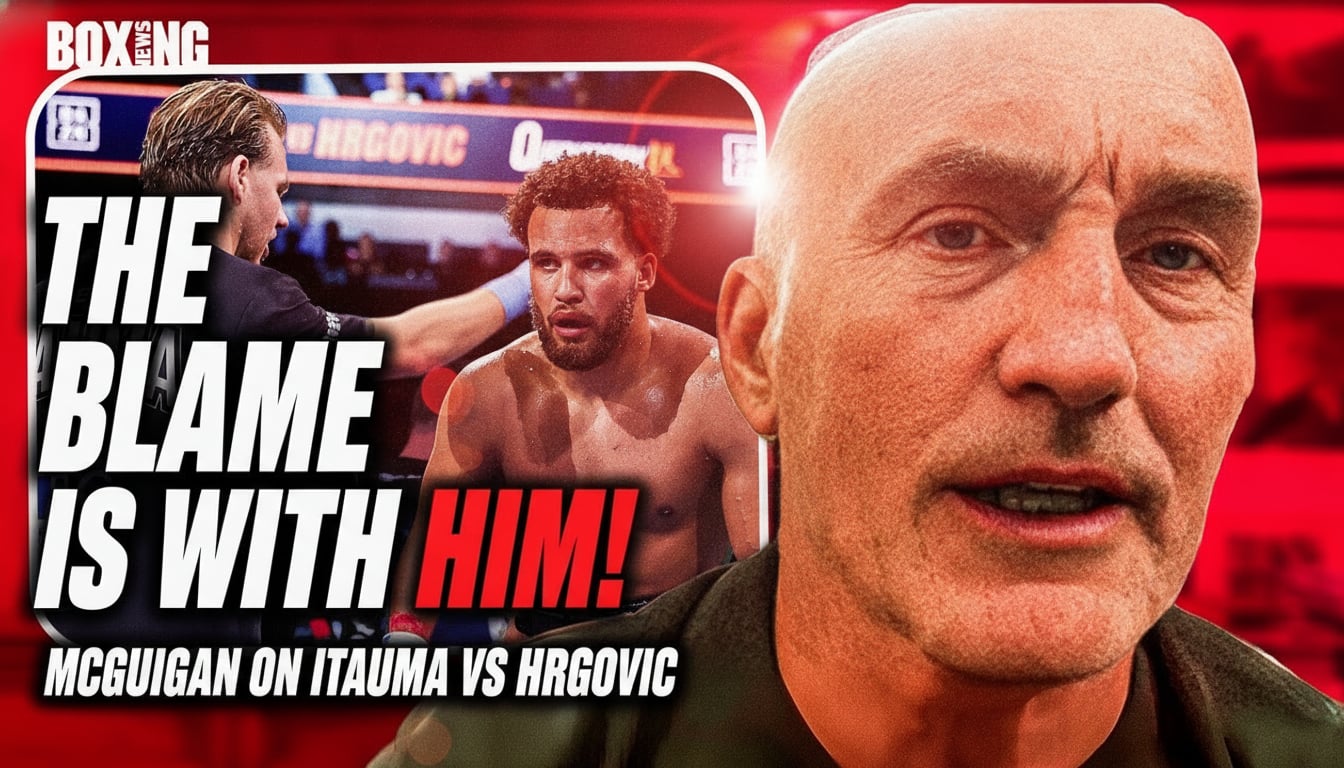
McGuigan Assigns Blame for Itauma
A Heavyweight Gamble That Didn't Pay Off
The heavyweight clash between phenom Moses Itauma and veteran contender Filip Hrgovic was circled on every boxing fan's calendar. It was a classic matchup of prodigious youth versus hardened experience, a high-stakes test designed to see if the hype was real. Now that the dust has settled, the post-mortems have begun, and few voices in boxing carry as much weight as former world champion Barry McGuigan. In a recent interview, the Hall of Famer didn't mince words, offering a stark analysis of where it all went wrong for the young Brit.
Itauma, touted as a future king of the division since his teenage years, was on an unprecedented fast track. His combination of speed, power, and poise seemed otherworldly. But in Hrgovic, he faced a different kind of beast. The Croatian, an Olympic medalist and perennial top contender, has long been one of the division's most avoided men. For him, this was an opportunity to derail a hype train and reassert his own claim to the throne. For Itauma's team, it was a calculated risk—one that, in the eyes of many, backfired spectacularly.
McGuigan Points the Finger at the Corner
According to the title of a new Boxing News interview, "THE BLAME IS WITH HIM AND HIS COACH!", McGuigan's assessment is sharp and direct. The legendary 'Clones Cyclone' appears to place the responsibility for the outcome squarely on the shoulders of not just the young fighter, but the team guiding his career. This critique goes beyond in-ring performance; it speaks to the strategic decisions made long before the first bell rang. Was the game plan flawed? Was Itauma prepared for the relentless, physical style of a seasoned pro like Hrgovic? Or was the fundamental error the decision to take such a monumental step-up in the first place?
McGuigan's perspective suggests a failure in management and coaching. In his view, a fighter's corner has a duty of care that includes protecting them from their own ambition. While Itauma undoubtedly believed he was ready, it is the job of experienced trainers and managers to gauge the risks and make the right move at the right time. The strong implication is that in this case, they got it wrong, exposing their young charge to a level of adversity he was not yet equipped to handle.
The Perils of Rushing a Prodigy
The Itauma-Hrgovic saga serves as a modern cautionary tale about the dangers of rushing a prospect. In an era of social media hype and commercial pressure, the temptation to accelerate a young fighter's development is immense. Promoters want a return on their investment, and fans clamor for exciting new challenges. However, the heavyweight division is littered with the stories of promising talents who were moved too quickly, their confidence shattered by a premature loss against an elite veteran.
True development often requires patience. It involves building experience incrementally, learning from different styles, and maturing both physically and mentally. A loss is not a career death sentence, but a humbling defeat in a fighter’s first major test can be a significant psychological hurdle. McGuigan’s analysis seems to align with this old-school wisdom, highlighting that talent alone isn't enough to conquer the highest peaks of the sport.
What's Next for the Division's Young and Old Guard?
For Filip Hrgovic, derailing the Itauma express firmly re-establishes his position as a serious threat to any reigning champion. A victory over such a highly-regarded name breathes new life into his world title ambitions and proves that the old guard isn't ready to step aside just yet. He remains a formidable challenge for anyone in the top five.
For Moses Itauma, the path forward is now one of rebuilding. At just 21, time is overwhelmingly on his side. The key will be how he and his team respond to this setback. Will they learn from the experience, take a step back to refine his skills, and rebuild his momentum more methodically? Or will they view this as a minor bump in the road? As Barry McGuigan’s pointed critique suggests, the decisions made in the coming months will be just as crucial as any game plan devised on fight night.