
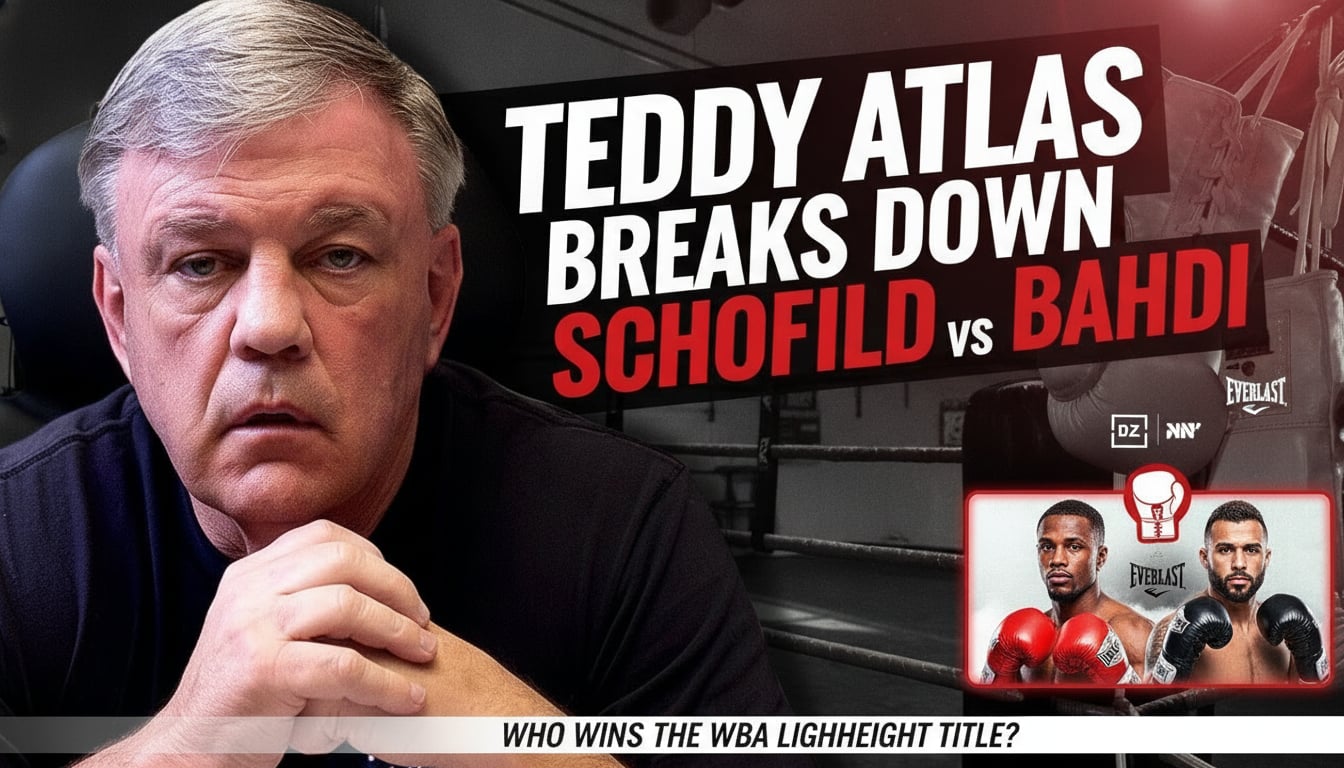
Schofield vs Bahdi: A Tactical
The Sharpshooter vs. The Prodigy
This week, the lightweight division serves up a compelling crossroads fight between rising star Floyd “Kid Austin” Schofield and the dangerous Lucas Bahdi. On the surface, it’s a classic matchup: Schofield, the dynamic young talent with a statement-making first-round KO over former champ Tevin Farmer, and Bahdi, the man famous for his sensational, come-from-behind knockout of Ashton Sylvia in 2024. But as legendary trainer Teddy Atlas explains, this fight is less about their highlight reels and more about the subtle, dangerous dance of technical flaws.
Atlas sees Bahdi as a “good technical fighter… a conservative fighter… a patient fighter.” This patience is both his greatest asset and a potential liability. “Sometimes patient fighters are easy to out-hustle, easy to outwork,” Atlas notes. Bahdi’s game plan is to be a sharpshooter, waiting for the perfect moment to unleash his primary weapons: a solid jab and a straight right hand. His path to victory might look familiar. “He might have to win that way again,” Atlas says, referencing the Sylvia knockout. “I could see him in that same situation where he's behind and he needs a knockout.”
A Tale of Two Right Hands
The fight’s central tension, according to Atlas, lies in how each man’s strengths perfectly exploit the other’s weaknesses—specifically concerning the right hand. Schofield, with his faster hands and feet, is expected to be the busier fighter and will likely be winning the rounds. However, he has a tendency to get reckless. “Schaefield will lead with hooks in front of you. He will reach. He will get wide in spots,” Atlas explains. This creates a perfect opening for a patient counter-puncher like Bahdi. “If you have a patient fighter that throws a nice straight right hand, he can punch inside of that wider punch.”
But the danger is a two-way street. While Bahdi is technically sound, he possesses a critical defensive flaw that Schofield’s best punch can exploit. “Body can be hit with right hands,” Atlas states plainly. “He finishes his head on the right side. I never let a fighter finish his head movement laying on the right.” He breaks it down simply: finishing head movement on the right lines you up for the opponent’s right hand; finishing on the left takes you out of the danger zone. With Schofield possessing a beautifully timed straight right—the very punch that put Tevin Farmer away—Bahdi is playing with fire every time he defaults to that habit.
The Evolution of 'Kid Austin'
For Floyd Schofield, this fight represents more than just a step up in competition after his scheduled bout with Shakur Stevenson fell through. It’s a test of his continued development. The hosts recall a time when Schofield was a “one-dimensional guy,” a “bull in the china shop” who would charge forward recklessly, often leading with his head and getting cut up in the process. “It got to the point like you can't keep living this way, son,” Atlas remarks.
To his and his father’s credit, Schofield has evolved. At just 24 years old, he has added layers to his game, becoming more of a boxer and less of a brawler. That newfound discipline will be crucial against Bahdi. If he reverts to his old style, he will give Bahdi the openings he’s patiently waiting for. But if he can blend his aggression with tactical boxing, he can control the fight and capitalize on Bahdi’s defensive gaps.
Atlas's Final Verdict: Expect Rounds
Despite the explosive potential created by their clashing flaws, Atlas doesn't necessarily see an early night for either man. “I see rounds in this fight,” he predicts. “I see this fight where it can go deep.” The reasoning is tactical. Bahdi is a defensively responsible, patient fighter who will use his jab to control distance and stabilize Schofield’s offense. This may force Schofield to respect his opponent’s power and box more thoughtfully, rather than simply trying to overwhelm him. The result could be a fascinating, high-stakes chess match that builds in intensity until one man finally exploits the other’s mistake.