
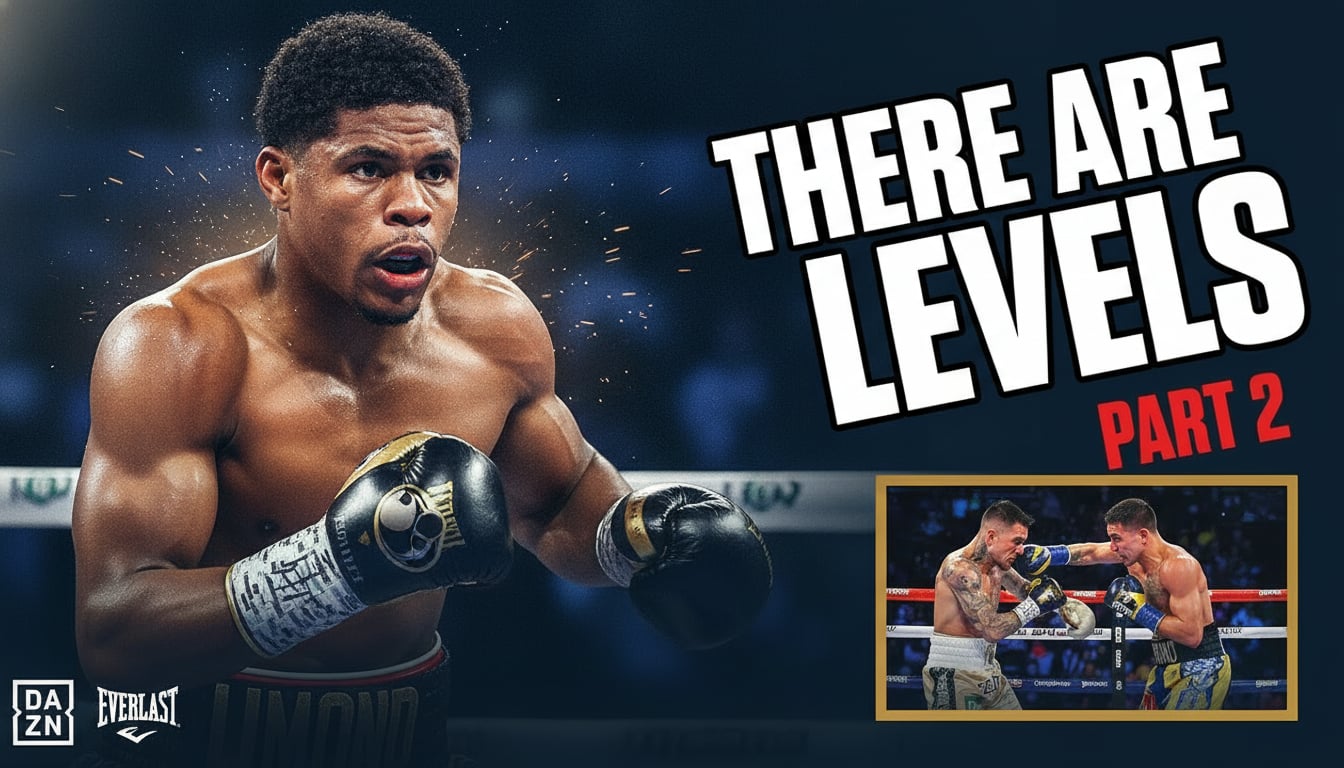
The Harsh Reality of Boxing's
Devin Haney's Disciplined Masterclass
In boxing, there's a saying that there are levels to the game. It’s a concept that goes beyond a simple win or loss; it describes a chasm in skill so wide that one elite fighter can make another look utterly ordinary. The Devin Haney vs. George Kambosos Jr. saga was a textbook example. Kambosos, a unified champion himself, tried everything to disrupt the rhythm of "The Dream." He switched stances, hoping to create unpredictable looks, but as the commentary noted, it often left him off-balance and vulnerable. Haney, calm and composed, took the initiative. His sharp, punishing right hand found a home over and over, wobbling Kambosos and silencing the Australian crowd. "Nice one-two from Devin Haney," the commentators repeated, as Haney systematically dismantled his opponent's game plan. By the final bell, there was no doubt. Haney's unanimous decision victory wasn't just a win; it was a clinical lesson in control, timing, and the harsh reality of boxing's upper echelon.
James Toney Schools a Warrior
Sometimes the levels are apparent from the opening seconds. When James "Lights Out" Toney faced the rugged Iran Barkley, the gap in technical skill was immediately and brutally clear. Barkley came out swinging, as was his style, but Toney, moving up in weight, was a different class of operator. Within moments, a confident Toney had Barkley wobbled and bleeding. The commentary was stark: "Barkley's chin not what it used to be, and he's already wobbled. Tony's got him in trouble." Toney’s defense was slick, ducking under Barkley's wild shots while delivering punishing, precise counters. He tripled up on his left, landed clean uppercuts, and controlled the pace with an unnerving confidence. Barkley, a true warrior, kept coming forward, but he was being picked apart. The fight was a systematic breakdown, culminating in the fight doctor stepping in to save a battered Barkley, whose eyes were nearly swollen shut. It was a brutal schooling in the sweet science.
The 'No Mas-chenko' Phenomenon
Perhaps no fight demonstrates the concept of levels more starkly than Vasiliy Lomachenko vs. Guillermo Rigondeaux. This was a historic matchup between two of the greatest amateurs of all time, both two-time Olympic gold medalists. It was supposed to be a chess match of the highest order. Instead, it became a one-man show. Lomachenko's footwork, angles, and feints were so superior that Rigondeaux, a defensive master, was left helpless and frustrated. "He is playing with Rigondeaux right now," one commentator exclaimed as Loma toyed with his opponent. The Ukrainian danced, pivoted, and landed shots from impossible angles, while Rigondeaux could do little but hold on. The humiliation was so complete that after the sixth round, the undefeated, pound-for-pound champion quit on his stool. Lomachenko had not just beaten Rigondeaux; he had made him give up, earning the nickname "No Mas-chenko" and creating one of the most definitive displays of skill disparity in modern boxing history.
Floyd Mayweather's Masterclass in Speed
Before he was "Money," a young Floyd Mayweather Jr. provided a legendary lesson in speed and skill against the beloved brawler Arturo Gatti. Gatti's plan was to pressure Mayweather, wear him down, and land his signature body shots. But from the opening bell, he couldn't touch him. Mayweather's quickness was simply on another level. "So quick," the announcers repeated, almost in disbelief. "Awesomely quick." Floyd would slip punches and fire back with three or four of his own before Gatti could even reset. He made the aggressive Gatti gun-shy, forcing him to pay dearly for every mistake. The transcript tells the story: "He slips away. And he throws double, triple punches." It was a masterclass in hitting and not getting hit. By the end, Gatti's corner was forced to stop the fight. It was a clear and decisive demonstration that heart and toughness, while admirable, are often no match for a truly generational level of speed and boxing IQ.